Or consider a coating.
What polishing actually is
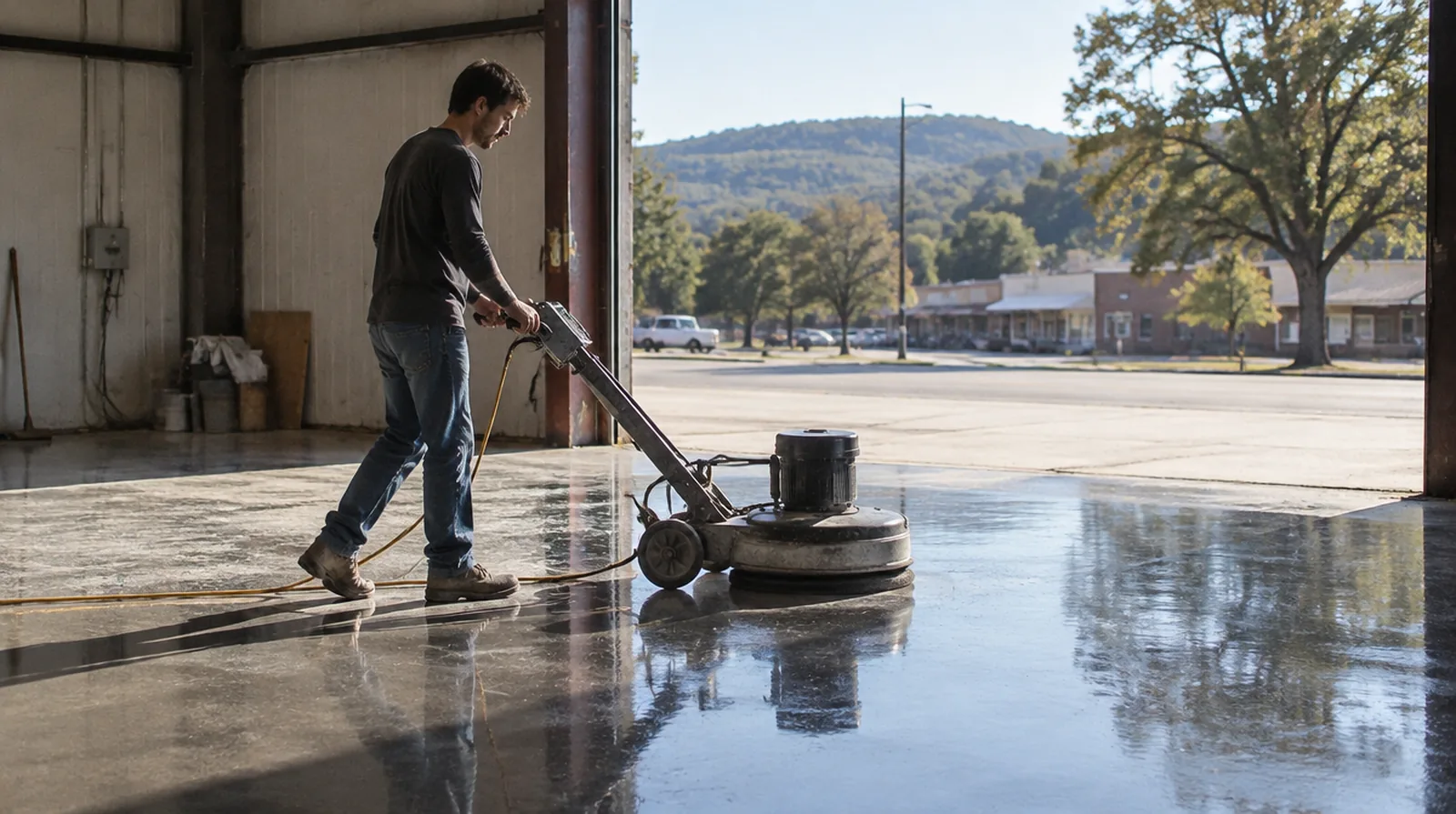
Polishing is a mechanical process. We use heavy grinders with diamond tooling to flatten and smooth the concrete, then apply a hardener that soaks into the surface. Finer and finer diamonds bring up the shine, and a guard is added at the end.
Who chooses it
Offices, retail spaces and modern homes often pick polished concrete for its clean look and low upkeep.
Will my slab work?
Slabs in good condition polish best. Old glue, heavy patching or deep cracks can show. We tell you at the estimate whether polishing will give you a result you will like.
Care
Dust mop daily in busy areas, and clean with a neutral cleaner. Buff now and then to keep the shine.
Polished concrete for Greenwood homes and businesses
Polished concrete is a strong, low-maintenance floor for shops, offices, warehouses and modern homes. Because it is the slab itself, there is no coating to peel or chip, and it handles heavy traffic well. It also reflects light, brightening rooms without extra fixtures.
The process
We grind with coarse diamonds, fill cracks, apply a densifier, then step up through finer pads to the sheen you choose. A stain guard goes on last.
Questions about polished concrete
Can a new home slab be polished? Yes, often with great results, ideally before walls and cabinets go in.
Will it show stains? Old stains may remain. A guard sealer helps resist new ones.
How long does it take? Two to four days for most spaces.
Is it slippery? No more than sealed concrete when dry.
When a coating is better
If your slab is patchy or sees chemicals, a coating may serve you better. We will tell you honestly.
Upkeep for a polished floor
Dust-mop daily in busy areas, use walk-off mats at doors and wash with a neutral cleaner. Grit is what dulls the shine. A professional burnish every year or two restores the gloss in high-traffic spots, and there is never a coating to strip or redo.
Shops and warehouses
Metal shop buildings around Greenwood often have flat, solid slabs that polish well. Polishing handles forklifts and rolling toolboxes, sweeps clean and never needs a recoat. That makes it a cost-effective choice for business owners who want a floor they do not have to think about. A satin finish hides tire marks and scuffs, and an auto scrubber keeps it clean with little effort.
Polished floors for churches, halls and community spaces
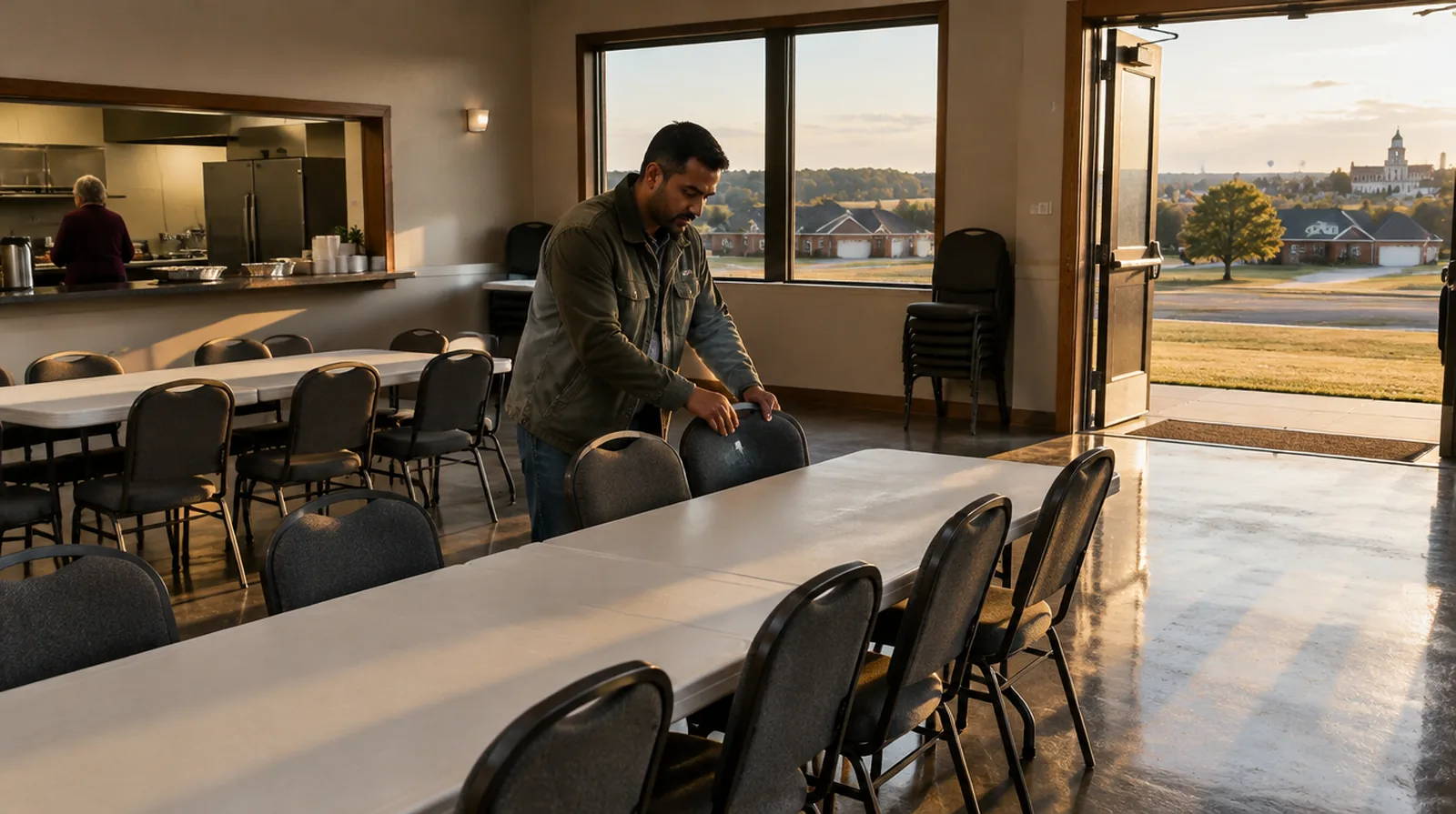
Church fellowship halls, community centers and event spaces in Greenwood host potlucks, youth groups, receptions and meetings, sometimes all in one week. Their floors take folding tables and chairs, rolling carts and spilled drinks. Polished concrete handles all of it. It is durable, easy to sweep and mop, and it reflects light to make a hall feel brighter.
Many older halls have slabs under worn tile or carpet. We remove the old flooring and adhesive, fill cracks and holes, and grind the surface smooth. Progressive polishing steps bring out the shine, and a densifier and guard protect the surface from stains and wear.
Low maintenance for volunteers
Polished concrete does not need waxing or stripping. Volunteers can keep it clean with a dust mop and a damp mop with a neutral cleaner, which is a big help for churches and nonprofits.
Kitchens and serving areas
Near kitchens and serving windows, we can adjust the sheen for better traction and recommend mats where spills are frequent.
Polished concrete question
How long will the hall be closed? It depends on size and condition. We schedule around services and events.
Can old tile adhesive be removed? In most cases, grinding removes it. Thick layers may need an extra step.
Will folding chairs scratch the floor? A densified and guarded surface resists scuffing. Rubber tips on chair legs help even more.
Schools and gyms
Classrooms, hallways and multipurpose rooms in schools and daycares can also benefit from polished concrete. It stands up to backpacks, rolling carts and lunchroom spills, and it is quick to clean at the end of the day.
Ask about polishing
Call (479) 597-5352.