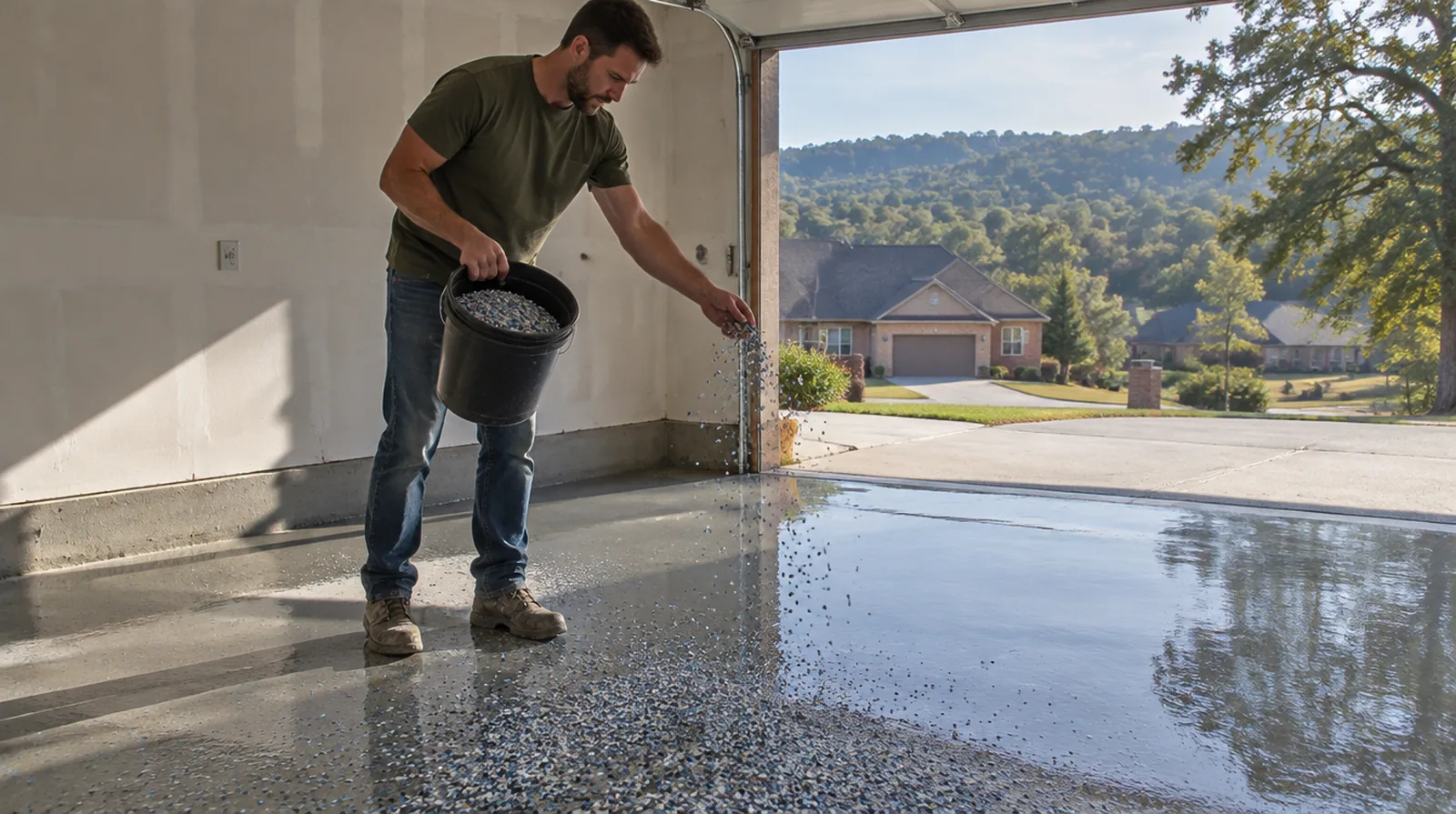
Process
Grind, prime, base, broadcast, scrape, clear coat.
See also metallic.
The everyday advantage
Chip floors are the most forgiving finish for a family garage. Cleats, crayons, juice boxes and wet dogs all leave marks, and the multicolor pattern keeps those from standing out. The chips also give the surface a slight texture, which helps when someone runs in with wet shoes.
Choosing chip size and color
Quarter-inch chips give a bold speckle that hides the most. Smaller chips look closer to stone. A blend of gray, tan and black is a safe choice for most homes, but school colors are possible if you want some fun in the garage.
More rooms than you might think
Flake works well in laundry rooms, mudrooms and enclosed patios, which see the same kind of wet and dirty traffic as the garage.
Cleaning
Sweep or blow it out, then mop with warm water and a gentle cleaner. Skip harsh acids and citrus degreasers.
Flake floors for busy Greenwood families
Between ball practice, school runs and weekend projects, Greenwood garages see a lot of traffic. A flake floor hides cleats, mud, grass clippings and tire marks, and its texture adds grip when kids run in from the rain. It is the most popular garage floor we install in town because it looks good with very little upkeep. Red clay is a problem all over this region, and this page on flake floors for busy garages covers which chip colors hide it between hose-downs.
How we install it
We grind, repair cracks, roll the base coat and broadcast chips until the base disappears. After it cures, we scrape and vacuum the loose flakes and roll on a clear topcoat. Most garages are done in one to two days.
Questions about flake
Will cleats hurt it? Metal cleats can scratch any coating. Rubber cleats are fine.
Can I coat a mudroom too? Yes, and it pairs nicely with the garage.
What colors hide red clay? Browns, tans and mixed earth tones.
How do I clean it? Sweep and hose down, or mop with a mild cleaner.
Picking chip size
Quarter-inch chips suit most two- and three-car garages. Smaller chips give a finer look in mudrooms and laundry rooms. Larger chips read bolder and hide more dirt. We bring sample boards in a few sizes so you can compare side by side in your own garage light before you decide.
Edges and stem walls
We often carry the coating a few inches up the wall so dirt and water cannot sit in the seam.
Flake floors for new-construction garages
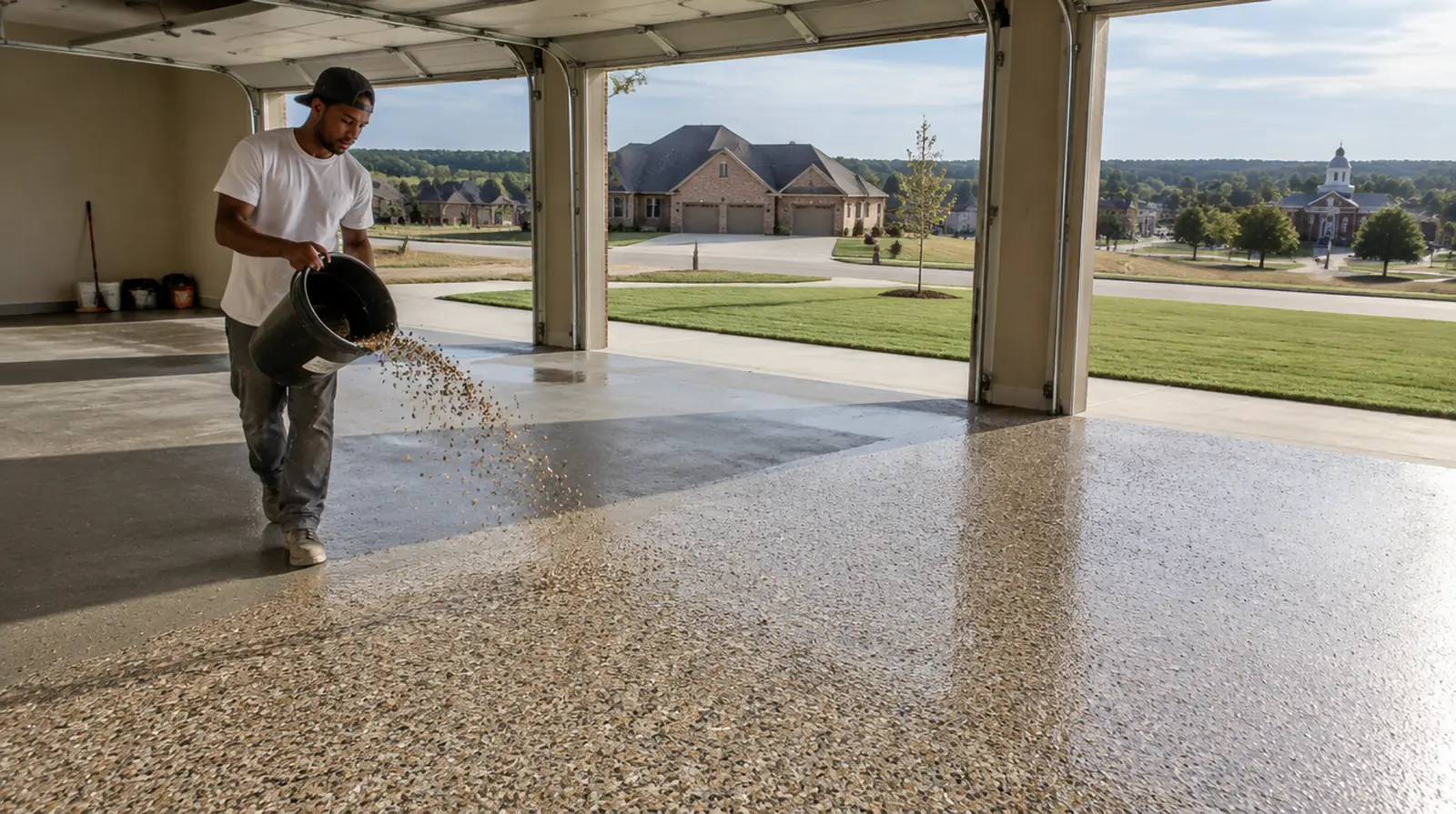
Greenwood has seen steady growth, and many families have moved into new homes with large two- and three-car garages. Those fresh slabs are a great canvas for a flake floor, but they need the right prep. Builders often apply a curing compound or sealer to new concrete, and it must be ground off completely before any coating will bond. We also confirm that the slab has cured long enough, usually about a month after pouring.
Once the slab is ready, we roll a pigmented base and broadcast chips by hand across the entire floor. Tan, brown and gray blends are popular in Greenwood because they suit brick exteriors and hide the dust and mud that come in from new yards that are still filling in. After the base cures, we scrape and vacuum loose chips, then apply a clear topcoat that sets the final texture.
Why chips work for families
A full flake broadcast hides scuffs, tire marks and dirt between cleanings, and it gives the floor a slightly textured feel that helps when the surface is wet. It is one of the most forgiving finishes for a garage that sees a lot of daily use.
Large garages and third bays
Third bays often hold a boat, a mower or a workshop rather than a car. We can tailor the build in that bay, adding extra thickness where heavy equipment sits or rolls.
Flake question
Can you match the flake to my brick? We can usually find or blend chips that complement brick and trim colors.
Do new homes need moisture testing? Yes. Even new slabs can hold moisture, and we test before choosing a primer.
Choose your flake blend
Call (479) 597-5352.