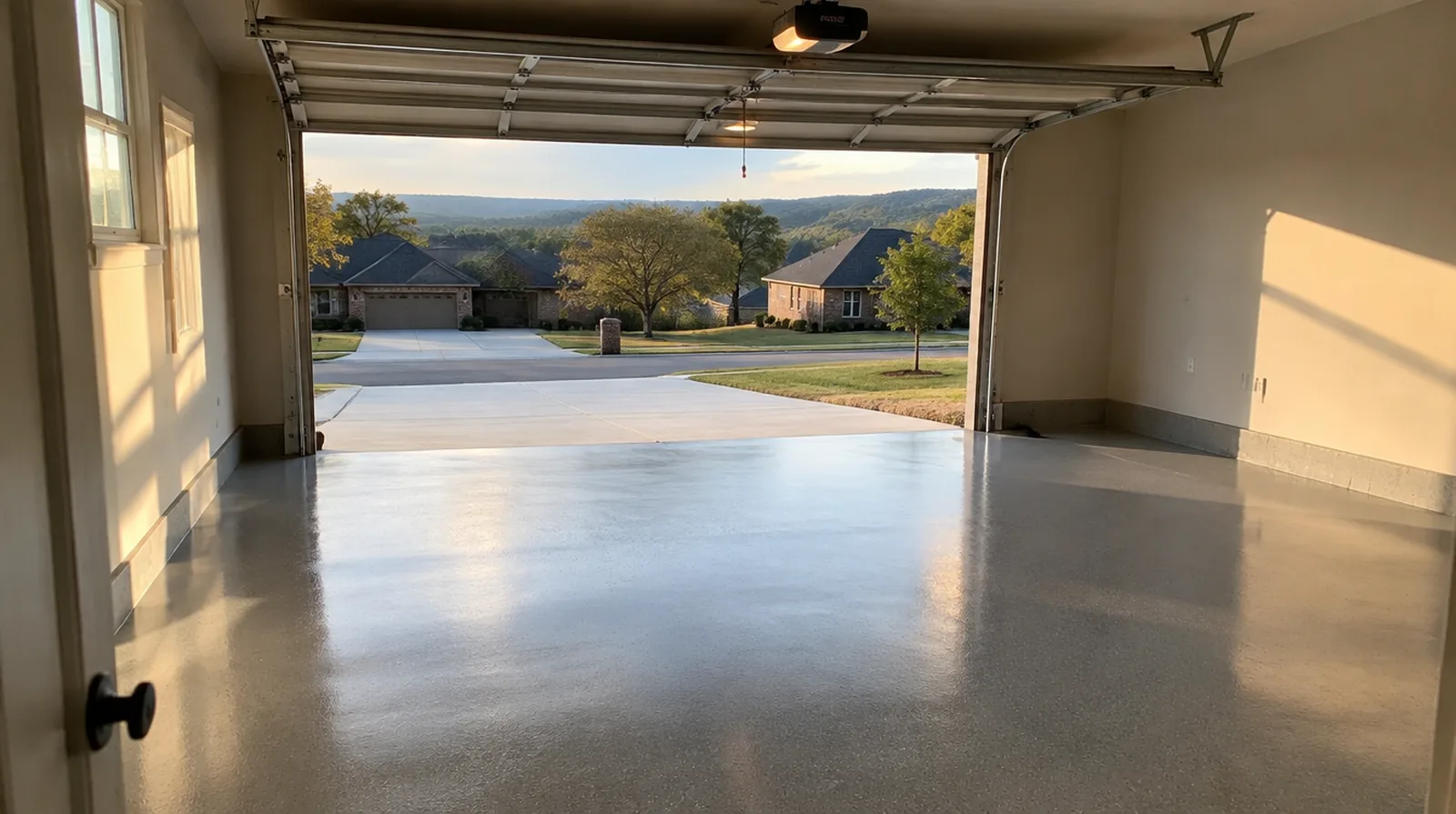
Our system
Grind, repair, prime, color coat, clear top. Add flake for texture.
New and old slabs
New slabs need time to cure. Older slabs need crack repair.
Time
Two days for most. Ask about polyaspartic.
Built around how you use it
A garage that holds a minivan, a basketball hoop, a chest freezer and a dozen bikes needs a floor that cleans fast and does not get slick. We usually suggest a chip broadcast with a clear top and a little grit near the door for wet days. If someone in the family works out in the garage, rubber mats can sit right on the coated floor.
What a new slab needs
Greenwood's newer subdivisions have slabs that are still giving off moisture in their first weeks. We test before coating. If it is not ready, we tell you, and we schedule the job when it is. Coating too early is one of the most common reasons new floors bubble.
What an older slab needs
Older garages near the square often have stains, paint spatters and cracks from years of settling. Grinding takes off the stained top layer, and crack repair keeps the lines from showing through the coating. For a closer look at how grinding, crack filling and the base coat fit together, here is a clear write-up on the steps behind a garage coating.
Upkeep
A push broom, a hose and a mild cleaner are all it takes. Put a mat under bikes with kickstands and under any car that drips.
Garage questions we hear in Greenwood
Can you coat a garage with a home gym? Yes. We recommend rubber mats under heavy racks.
Do I need to be home? Only at the start and end of each day.
Is the grinding dusty? Our grinders run with vacuums, so dust is controlled.
What if it rains? We work inside the garage, so rain is rarely a problem, though high humidity can affect cure times.
The layers we build
We grind the slab to open it up, fill cracks and spalls, and roll a primer that soaks into the concrete. Then comes a body coat in solid color or with flake, and a clear topcoat that takes the wear from tires, tools and weather. On newer Greenwood slabs, the grind removes the builder's curing film so the primer can bond. On older slabs, we spend more time on crack repair and stain removal.
The garage entry: where the house meets the floor
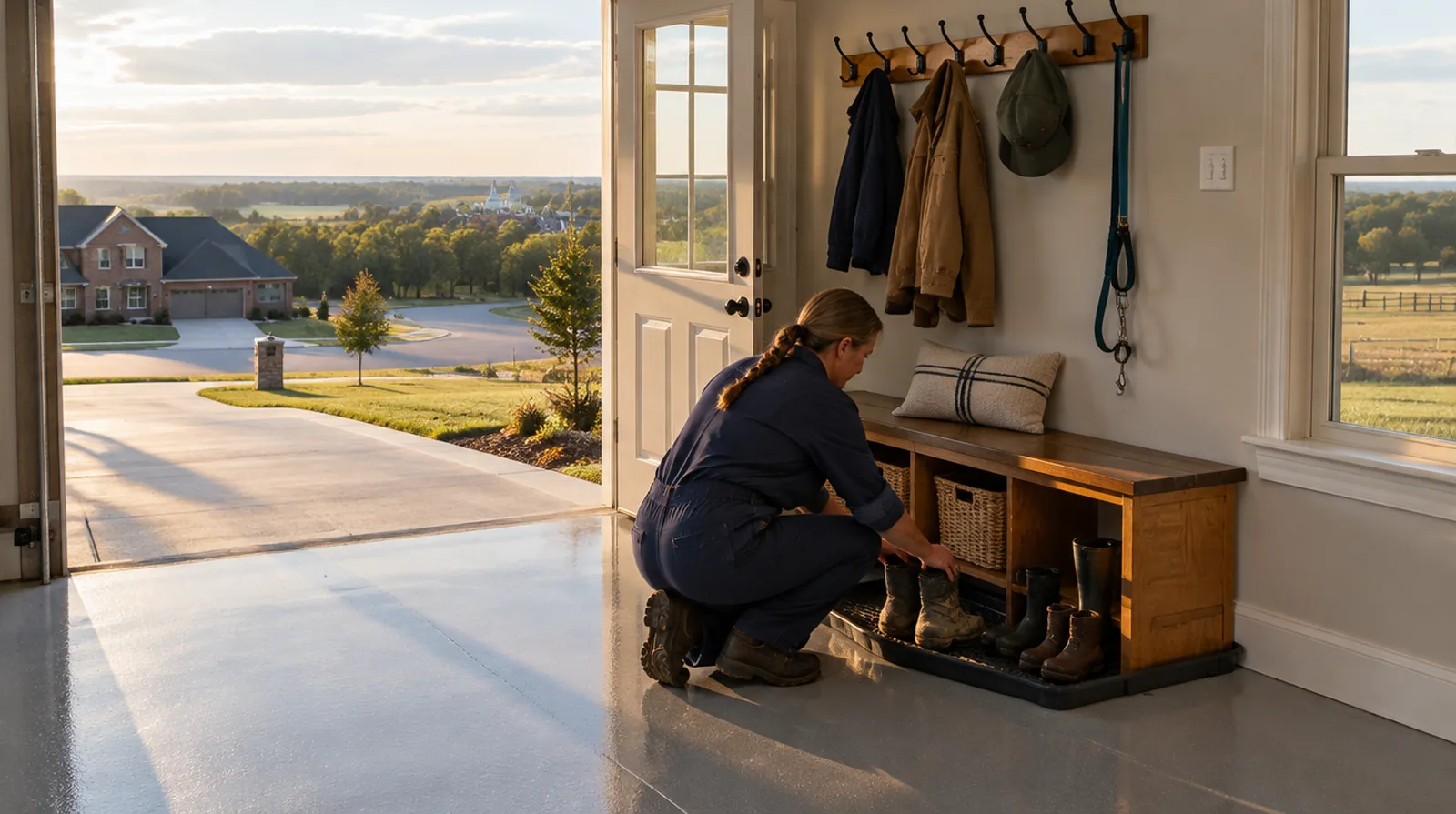
For many Greenwood families, the door from the garage into the house is the main entrance. It is where shoes come off, backpacks get dropped and the dog's leash hangs on a hook. That small area by the steps takes more foot traffic than the rest of the garage combined, and it is often where a bare floor looks worst, with scuffs, stains and a ring of dried mud.
When we plan an epoxy floor, we treat that entry zone carefully. The prep is thorough, the coating build is full, and we can add a slightly stronger texture so wet shoes and paws do not slip. Many homeowners add a shoe bench, a boot tray and wall hooks after the install, turning the corner into a simple mudroom that is easy to keep clean.
Choosing a color for a family garage
Light gray and tan colors hide dust and dried mud well and make the space feel brighter. Solid colors give a clean, simple look, while adding a light flake broadcast hides more everyday dirt. We bring samples so you can compare them in your own garage.
Under appliances and storage
Second refrigerators and chest freezers are common in Greenwood garages. We coat under where they sit so condensation stays on the surface and does not stain the concrete.
Garage floor question
Can you coat the steps into the house? Yes. Coating the concrete step and landing gives a finished look and easier cleaning.
How long before the car can come back? Usually a few days for epoxy. We give you the date in writing.
Will the floor be slippery when wet? We add texture to the topcoat so it keeps good footing when wet.
Get a garage quote
Call (479) 597-5352.